

Taiwan’s Record Budget Spends Nearly Three Times More on Energy Than on Weapons
The NT$607.63 billion supplementary package allocates NT$421.3 billion to economic stabilization — most of it absorbing the cost of the Hormuz conflict — against NT$145.69 billion for missiles and drones
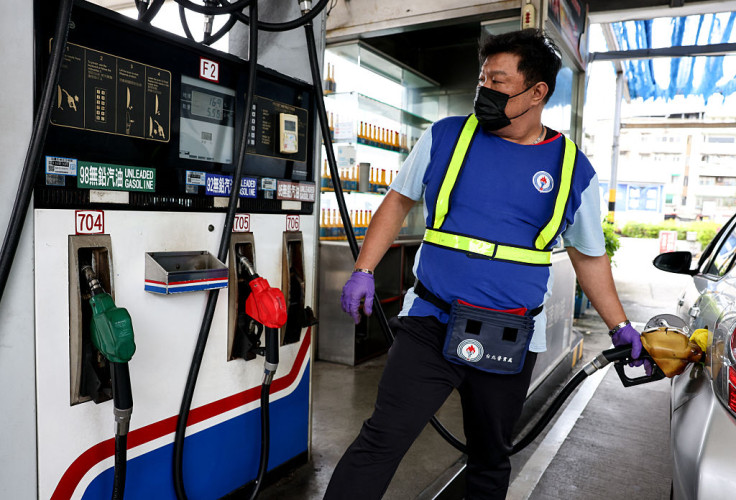
TAIPEI — Taiwan's Executive Yuan approved a record NT$607.63 billion supplementary budget on Thursday, and the largest share of it goes to holding down the price of fuel.
The package — US$19.13 billion — allocates NT$421.3 billion to stabilizing the economy and NT$145.69 billion to weapons procurement. Officials said it was structured to have no effect on fiscal planning or the national debt, and called on the legislature to pass it.
Measures to stabilize the economy amid the conflict in the Strait of Hormuz account for the single largest component, a Directorate-General of Budget, Accounting and Statistics spokesperson said.
The biggest single line is a capital injection.
State-owned CPC Corp. would receive NT$233.8 billion to offset losses incurred building Taiwan's liquefied natural gas infrastructure and supply chains while holding fuel prices down in a heated energy market. The company is in the red as a result.
A further NT$187.5 billion would offset inflation stemming from the Middle East conflict — funding price controls on fuel, household gas and electricity, and subsidies for domestic air travel, taxi fuel, fertilizer, fuel for the fishing fleet and harbor service fees.
Vice Minister of Economic Affairs Lai Chien-hsin said energy prices surged after the US-Iran conflict began in February, with crude oil reaching a record US$144 a barrel. Prices fell in late June, he said, but CPC must continue stabilizing fuel costs while the fighting continues, as Japan and South Korea have done.
Without the intervention, Lai said, gasoline would have reached NT$45 a liter and an average commuter would be paying NT$1,000 to NT$2,000 more each month. Bottled LNG has been held under NT$200 a bottle.
The government's plan to keep household natural gas prices unchanged for the rest of the year depends on the budget passing.
Lai framed CPC's LNG investment as a national security matter, saying Taiwan needs greater storage capacity for strategic reserves.
The defence allocation is the smaller half, and the ministry's account of why it is needed is unusually direct.
Huang Wen-chi, director of the defence ministry's Department of Strategic Planning, said the funds would buy capabilities "Taiwanese armed forces should have had years ago."
The military budget approved by the legislature funded only 10 of 23 critical projects, he said, producing "yawning capability gaps and negative effects on the armed forces' ability to fight."
The supplementary money covers seven types of missiles including high-altitude anti-ballistic missile air defence, coastal surveillance drones, attack drones, uncrewed one-way strike boats, and two classified projects. The ministry's revised target is to field 40,000 drones by next year.
Asked whether the ministry could seek funding in this fiscal year for next year's items, DGBAS official Hsu Yung-yi cited Article 72 of the Budget Act, which permits the Executive Yuan to propose budgets for special projects scheduled a year ahead.
Cabinet spokeswoman Michelle Lee would not say whether the Executive Yuan would countersign the legislature's own version of the defence budget, received Wednesday evening and still under review, saying only that Taiwan cannot leave its defences unattended.
The two halves of the budget describe the same problem.
Taiwan is spending NT$421.3 billion to absorb the domestic cost of a conflict 8,000 kilometers away, because it imports nearly all its energy and a closed shipping lane reaches its petrol pumps. It is spending NT$145.69 billion on missiles, drones and strike boats because of a threat 130 kilometers across the strait.
Both are bills for the same underlying vulnerability: an island economy that cannot supply itself and cannot guarantee the routes that do.