

Google to Grow Taiwan Offices 60% as Partners Move Into AI Chip Design
Taiwanese firms are no longer just building Google's hardware — they are helping design it, a senior executive said at Semicon Taiwan
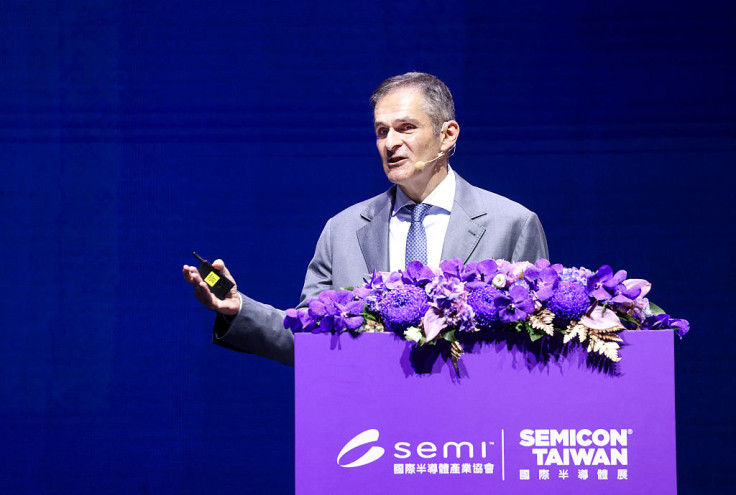
TAIPEI — Google is expanding its office space in Taiwan by 60% as local companies take on a larger role in designing the artificial intelligence hardware the company runs its business on, a senior executive said.
Amin Vahdat, Google's senior vice president and chief technologist for AI and infrastructure, said the company expects its Taiwanese operations to keep growing. He gave no investment figure, hiring target or timetable.
Vahdat, speaking to reporters after a keynote at the Semicon Taiwan trade show in Taipei, described the island as a critical engineering hub for an ecosystem that now extends well beyond silicon into advanced packaging, liquid cooling and high-power systems.
Taiwan is already home to Google's largest hardware engineering operation outside the United States.
The word Vahdat kept returning to was codesign.
Taiwanese companies are participating in the design of Google's AI systems rather than only manufacturing them, he said, with discussions under way with several partners on future hardware generations — rack-level architecture, design for manufacturing and system reliability.
"We couldn't be building the infrastructure, the compute platform that we do today, without this deep codesign," Vahdat said, adding that the cooperation was accelerating "month over month, quarter over quarter, year over year."
That is a meaningful distinction for an economy that has spent three decades building the world's chips to other companies' specifications. Contract manufacturing captures margin on production. Codesign captures margin on intellectual property, and it is considerably harder to relocate.
Vahdat described the sequence for Google's own chip designs, which are fabricated by Taiwan Semiconductor Manufacturing Co. Google's Taiwan team brings the first units up, tests them and validates their performance before they reach software developers.
"You can't imagine how much anticipation there is for those first few chips that come off the assembly line," he said. "All that actually starts in Taiwan."
The expansion is being driven by demand Vahdat put at roughly 10 times year over year for computing power, as AI models and services grow more capable. Google's compute buildout runs on infrastructure demand that has scaled alongside revenue at the largest AI developers.
Asked which constraint would bite hardest over the next 18 months, he declined to name one. Bottlenecks could shift rapidly among power availability, chip supply, memory, cooling, rack delivery and networking, he said.
"You can't afford to take your eye off any of the constraints."
Energy, he said, is a significant constraint for both Google and Taiwan — a candid assessment given Taiwan's grid is already under pressure and the government is targeting a substantial expansion of clean generation. Google remains committed to round-the-clock carbon-free energy and will keep investing in renewables, batteries and geothermal power, he said.
His advice for Taiwan was specific: pursue greater manufacturing automation and power efficiency, and improve cooperation across the supply chain.
Premier Cho Jung-tai, speaking at the show's opening, put Taiwan's semiconductor production value at US$209.1 billion last year, up 22.7%.
The government would prepare the land, energy, talent and financial support needed to keep pace with the industry's expansion, Cho said, including readying factory space so companies can move in quickly.
Semicon Taiwan runs through Friday at the Taipei Nangang Exhibition Center, with more than 1,300 exhibitors and 4,300 booths from over 60 countries and territories.