

Taiwan Went From 1% to 16% of Shield AI’s Components in Two Years
US drone makers are sourcing more from Taiwanese suppliers and integrating software with local platforms. Everyone on the panel said it will not scale without procurement commitments
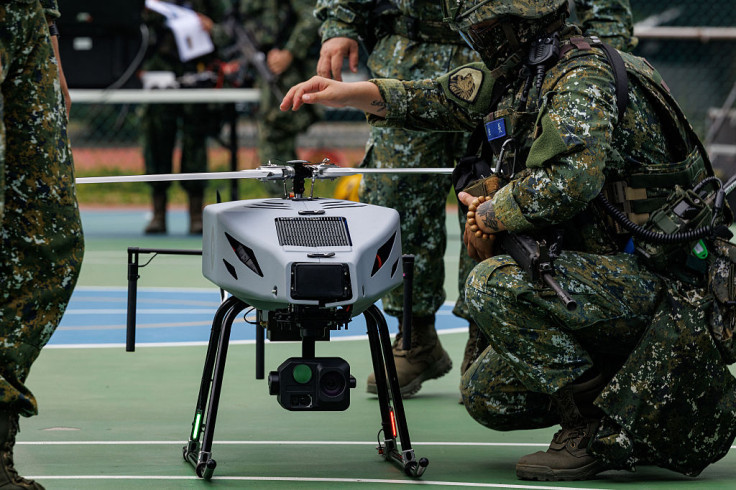
TAIPEI — Taiwan's share of the materials and components in Shield AI's aircraft has risen from under 1% in 2024 to 16%, and could reach 25% in the near future, the company's director of government relations for Asia said Thursday.
Maximilian Chen said Shield AI established a permanent presence in Taiwan last year and now employs nearly 10 people there, working with Aerospace Industrial Development Corp., the National Chung-Shan Institute of Science and Technology and Thunder Tiger Corp.
"If you want to be the best partner, you have to be close to your partner," Chen said at a forum hosted by the Research Institute for Democracy, Society and Emerging Technology and SEMI Taiwan in Taipei.
The company has integrated its Hivemind autonomous piloting software with Taiwanese platforms. Technical integration with Thunder Tiger took about six weeks.
AeroVironment has sourced more than US$20 million of panels, sensors, batteries and other components from Taiwan over the past three years, said Celine Fahn, its managing director for international business. The company is working with Taiwanese partners on the Switchblade 300 loitering munition and hopes to develop and manufacture additional systems on the island.
Fahn described the shift as Taiwan moving beyond supplying individual components toward involvement in the development and integration of autonomous systems.
That is the distinction that matters. Component supply is a volume business with thin margins and easy substitution. Integration is where value accrues, and it is considerably harder to relocate — the same progression Taiwanese firms have been making in AI hardware, where Google said this week its Taiwanese partners now participate in codesigning its systems.
Expanding that role, Fahn said, will require Taiwanese companies to standardize components and improve interoperability so their products can plug into US and allied systems.
The panel's more striking contributions were the caveats, and they came from every direction.
Trent W. Emeneker, chief executive of Kill Zone and former Blue UAS lead at the US Defense Innovation Unit, said building supply chains free of Chinese inputs remains a fundamental obstacle. Batteries, permanent magnets and rare-earth materials are particularly difficult to replace, he said, because substitution requires alternative mining, refining and processing capacity that does not currently exist at scale.
He was blunter about readiness.
"We don't have robots at scale. We don't have the training or tools that we need to use them at scale," Emeneker said.
Governments, he argued, need to provide predictable demand over several years so companies can justify investing in production of millions of affordable air, ground and maritime systems.
Holly Sheng, president of Hota Industrial Mfg. Co., made the same argument from the manufacturing side. Taiwan's ability to make components for drones and robots would not translate into large-scale production without clearer procurement volumes and firms capable of integrating hardware and software into complete systems.
"A feasible business model is very important so that people are willing to invest," Sheng said.
The timing is not accidental. Taiwan's cabinet approved a supplementary defence budget on Thursday that allocates NT$55.9 billion to three uncrewed-system programmes, including coastal surveillance drones — the kind of multi-year commitment both Emeneker and Sheng identified as the missing ingredient.
That budget still requires legislative approval.
The gap the panel described is therefore narrowing from one end. Whether it closes depends less on Taiwanese manufacturing capability, which the Shield AI figures suggest is not the constraint, than on whether governments in Taipei and Washington place orders large enough and long enough to justify building factories.