

Taiwan’s Defence Spending Passes NT$1 Trillion for the First Time
A NT$145.7 billion top-up lifts military outlays to 3.83% of GDP — and nearly half of it goes to two programmes the government will not describe
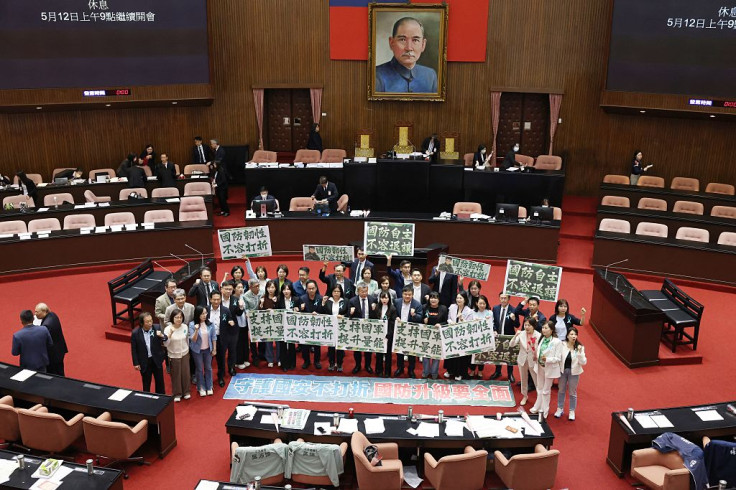
TAIPEI — Taiwan's cabinet approved a supplementary defence budget of NT$145.7 billion on Thursday, pushing total defence-related spending past NT$1 trillion for the first time and lifting it to roughly 3.83% of gross domestic product from 3.32%.
That is the highest level in decades, and it still requires approval from a legislature the government does not control.
The top-up is designed to plug gaps left after opposition lawmakers cut NT$470 billion in May from an eight-year, NT$1.25 trillion special defence package. NT$145.7 billion restores less than a third of what was removed.
Of the new money, NT$133.4 billion is allocated to military investment.
The breakdown is where the government's assessment of the threat becomes visible.
NT$55.9 billion goes to three uncrewed-system programmes, including coastal surveillance drones. NT$13 billion funds seven projects including the domestically developed Chiang Kung, or Strong Bow, mid-tier anti-tactical ballistic missile system.
And NT$64.5 billion — 44% of the entire supplementary budget — funds two classified programmes the cabinet has not described.
Read against what Taiwan's defence ministry told the legislature earlier this week, the pattern is consistent. Its 2026 China Military Power Report said People's Liberation Army exercises are increasingly focused on the joint blockade and control of Taiwan's external air and sea routes, and on anti-access operations intended to deter foreign intervention.
Coastal surveillance drones and standoff missile systems are what a government buys to see and strike at range. They are not what it buys to defend a beach.
The politics are the constraint, not the money.
The NT$470 billion cut in May was made by opposition lawmakers, and the same legislature must now approve the supplementary budget. Defence appropriations in Taiwan have been contested repeatedly, and the government's assessment of Chinese intent has not resolved the disagreement over what to spend.
At 3.83% of GDP, Taiwan would still sit below the 5% figure Washington has pressed on allies and partners — a gap that has drawn comment from US officials, and one the classified programmes make harder for outside observers to assess.
The scale of the classified allocation is itself notable. Nearly half a supplementary defence budget going to programmes with no public description limits legislative scrutiny as well as external analysis, and it is the element opposition lawmakers are most likely to contest.
Taiwan's Coast Guard Administration recorded 244 Chinese government vessels around the island in July, averaging nearly eight a day and more than four times the number a year earlier. A further 152 were logged in the first three weeks of August. Those figures exclude PLA warships, which operate around Taiwan almost daily.
The spending decision and the vessel count are the two halves of the same argument. One measures what is happening. The other measures what Taipei is willing to pay to respond to it — and how much of that its legislature will allow.