

Taiwan Is Close to Restarting the Reactor It Shut Down 16 Months Ago
Regulators have completed technical reviews of Taipower's application to reopen Ma-anshan. The KMT wants an apology; the DPP says voters will decide in a November referendum
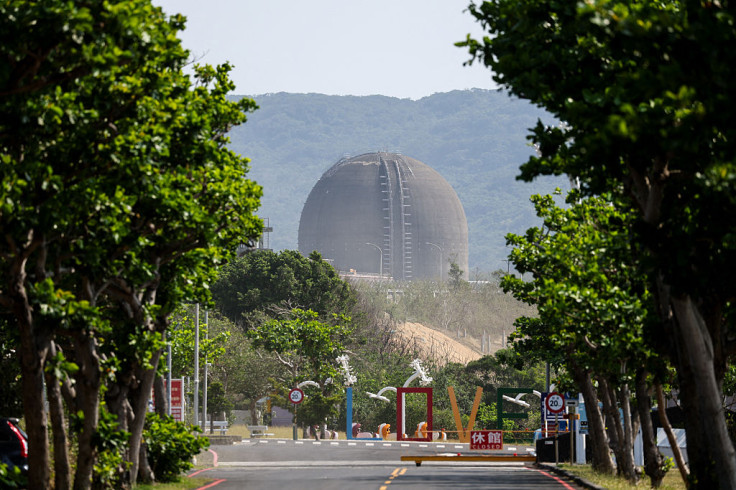
TAIPEI — Taiwan's nuclear regulator has completed its technical review of an application to restart the country's last operating reactor, less than a year and a half after the plant was shut down to fulfil a governing-party pledge to end nuclear power.
The Nuclear Safety Commission said Wednesday it had finished reviewing Taiwan Power Co.'s application to restart the Ma-anshan plant in Pingtung County's Hengchun Township, with approval pending final administrative procedures.
Ma-anshan shut down its last reactor — and Taiwan's last active reactor — on 17 May last year.
The opposition Chinese Nationalist Party said President William Lai should apologize. KMT Culture and Communications Committee Director Chen I-hsin said the restart plans showed Lai's pledge to achieve a "non-nuclear homeland" without electricity shortages had failed, and that Taipower's pursuit of the reopening vindicated the party's calls for a more pragmatic energy policy.
Nuclear power, Chen said, is essential to industrial competitiveness, artificial intelligence development and energy security. The Democratic Progressive Party's long-standing opposition to it, he said, was a "mistaken policy" that had cost Taiwan.
The DPP's response was to redistribute the question.
Caucus chief executive Chuang Jui-hsiung asked whether Chen would also seek contrition from opposition politicians who had campaigned against nuclear power — naming New Taipei City Mayor Hou You-yi and his predecessor Eric Chu, both former KMT presidential candidates.
The "nuclear-free homeland" policy reflected public safety concerns when it was adopted, Chuang said at the Legislative Yuan. Rising electricity demand from Taiwan's AI and semiconductor sectors had made a policy review appropriate, but it was premature to conclude the government had decided to restart nuclear power.
Voters would settle it, he said, through a referendum on scrapping the nuclear-free policy to be held alongside November's local elections.
Even if the referendum passes, Chuang added, restarting Ma-anshan would require clearing multiple regulatory and safety hurdles, including nuclear waste disposal.
The legal groundwork was laid before the shutdown was complete.
Amendments passed in May last year allow licenses for decommissioned reactors to be extended up to 20 years beyond the original 40-year operating limit. Taipower applied in March to restart both Ma-anshan and the Guosheng plant in New Taipei City's Wanli District, which entered decommissioning in March 2023.
So the same legislative year produced both the final shutdown and the mechanism to reverse it.
What changed in the interval is demand, and it is not in dispute between the parties.
Taiwan's semiconductor production value reached US$209.1 billion last year, up 22.7%, and Premier Cho Jung-tai said this week the government would prepare the land, energy, talent and financial support needed to keep pace with the industry's expansion. Google's chief technologist for AI and infrastructure told a Taipei trade show that energy is a significant constraint for both his company and Taiwan.
Both parties now accept that AI and semiconductor demand justifies revisiting the policy. What they disagree about is who should say they were wrong.
That is the shape the argument will take into November. A referendum held alongside local elections turns a technical question about reactor licensing into a proxy for both parties' records — and neither the electricity nor the waste will be affected by which of them apologizes.